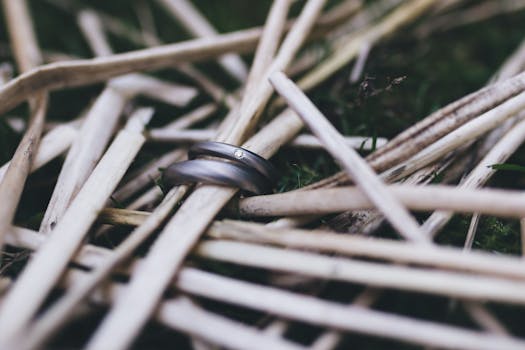

The faint shimmer of a diamond, coupled with the warm embrace of gold, has long been the visual shorthand for enduring commitment. But what truly elevates real gold diamond wedding rings from mere adornments to profound symbols? It’s a question that resonates deeply for those standing on the precipice of marriage, seeking not just a beautiful object, but an artifact imbued with lasting significance and intrinsic value. In my experience, many couples are drawn to the perceived perfection of these pieces, yet overlook the critical nuances that distinguish a truly exceptional choice from a merely satisfactory one.
Understanding the foundational elements – the gold and the diamond – is paramount. This isn’t simply about selecting a shiny object; it’s about making a decision that will be worn, cherished, and passed down, potentially through generations. The allure of “real gold” and “diamonds” is undeniable, but the devil, as they say, is in the details.
The Unseen Architecture: Gold Purity and Its Implications
When we speak of “real gold,” it’s crucial to acknowledge the spectrum of purity. Gold is rarely used in its pure, 24-karat form for jewelry due to its softness. Instead, it’s alloyed with other metals to enhance durability and achieve various color tones. This is where understanding karats becomes your most valuable tool.
14 Karat Gold: This common alloy consists of 58.3% pure gold. It offers an excellent balance of durability and value, resisting scratches and dents better than higher karats. It’s a practical choice for active lifestyles, and its slightly higher alloy content can make it more affordable.
18 Karat Gold: With 75% pure gold, 18K offers a richer color and a more luxurious feel. While still durable enough for everyday wear, it is softer than 14K and will show wear more readily over time. It represents a step up in both perceived value and hue.
22 Karat Gold: This nearly pure gold alloy (91.7%) is exceptionally soft and often reserved for decorative pieces or in regions where higher purity is culturally favored. For a wedding ring intended for daily wear, 22K is generally not recommended due to its propensity for damage.
The choice of gold purity directly impacts the ring’s color, durability, and cost. Yellow gold, rose gold, and white gold all achieve their distinct hues through different alloying metals. For instance, white gold is typically alloyed with nickel or palladium and then plated with rhodium for its bright white finish, which will eventually wear away, revealing the underlying color.
Diamond Grading: More Than Just a Pretty Face
The brilliance of a diamond is its primary draw, but its true value lies in the ‘Four Cs’: Cut, Color, Clarity, and Carat weight. For real gold diamond wedding rings, understanding these factors is non-negotiable.
#### The Art of the Cut: Where Light is Born
The cut is arguably the most critical ‘C’ as it dictates how effectively a diamond interacts with light. A well-cut diamond will exhibit exceptional sparkle, fire (colored flashes), and scintillation (patterns of light and dark). Even a diamond with high color and clarity grades can appear dull if poorly cut.
Ideal Cut: Maximizes brilliance and fire, reflecting light optimally.
Excellent Cut: Very close to ideal, offering superb sparkle.
Very Good Cut: Still reflects a good amount of light, but with slight compromises.
Good Cut: Noticeable compromises in brilliance.
When evaluating diamonds for your wedding bands, prioritize an excellent or ideal cut; it’s where the magic truly happens.
#### Color: The Absence of Hue
Diamond color is graded on a scale from D (colorless) to Z (light yellow or brown). Truly colorless diamonds are rare and command higher prices. For most discerning buyers, a diamond in the near-colorless range (grades G through J) offers an exceptional visual experience without the premium of a completely colorless stone. The subtle differences are often imperceptible to the untrained eye, especially when set in gold.
#### Clarity: Unveiling the Imperfections
Clarity refers to the presence of internal inclusions and external blemishes. The fewer and less visible these are, the higher the clarity grade.
Flawless (FL) & Internally Flawless (IF): Extremely rare and costly, with no visible inclusions or blemishes under 10x magnification.
Very Very Slightly Included (VVS1 & VVS2): Inclusions are minuscule and difficult to see even under magnification.
Very Slightly Included (VS1 & VS2): Inclusions are minor and not visible to the naked eye.
Slightly Included (SI1 & SI2): Inclusions are noticeable under magnification but may be invisible to the naked eye.
Included (I1, I2, I3): Inclusions are obvious under magnification and can affect the diamond’s durability and appearance.
For most wedding rings, a VS or SI clarity grade offers the best balance of beauty and value. Inclusions are often invisible without magnification, preserving the diamond’s stunning appearance.
#### Carat Weight: The Measure of Mass
Carat weight, a measure of a diamond’s mass, is often conflated with size. While a higher carat weight generally means a larger diamond, the cut significantly influences how large a diamond appears. A well-cut 1-carat diamond can look as substantial as a poorly cut 1.2-carat stone. For real gold diamond wedding rings, consider the proportion of the diamond to the band and your finger; sometimes, multiple smaller diamonds can offer a captivating alternative to a single large stone.
The Symbiotic Dance: Setting Styles and Their Impact
The setting is the unsung hero of a diamond ring, influencing both its perceived size and its overall aesthetic. It also plays a crucial role in diamond security.
Prong Settings: These settings use metal claws to hold the diamond. A four-prong setting is common, but a six-prong setting offers greater security and can make a diamond appear larger.
Bezel Settings: A metal rim encircles the diamond, offering maximum protection and a sleek, modern look. This is an excellent option for active individuals.
Pavé Settings: Tiny diamonds are set closely together, resembling a cobblestone path, creating a continuous sparkle. These are delicate and require careful maintenance.
Channel Settings: Diamonds are set within a groove or channel of metal, offering protection and a clean, streamlined appearance.
The chosen setting should complement the diamond’s characteristics and the wearer’s lifestyle. For instance, a bezel setting might be ideal for a practical couple, while a prong setting emphasizes the diamond’s facets.
Heirloom Potential: Craftsmanship and Enduring Design
Beyond the intrinsic value of gold and diamonds, the craftsmanship of a real gold diamond wedding ring is paramount for its longevity and heirloom quality. Look for well-executed solder joints, smooth polishing, and secure stone settings. A well-crafted ring will not only feel substantial and comfortable but will also withstand the test of time and daily wear.
Consider the design’s timelessness. While trends come and go, classic styles – solitaires, three-stone settings, or subtly detailed bands – tend to endure. A ring that feels personally meaningful and aesthetically pleasing today will likely retain its charm for decades.
Beyond the Obvious: Navigating Ethical Considerations
In today’s world, the provenance of your jewelry matters. Reputable jewelers are transparent about their sourcing practices. Understanding the ethical implications of mining and the diamond trade is becoming increasingly important for informed consumers. Look for jewelers who offer conflict-free diamonds and responsibly sourced gold. This adds another layer of value to your commitment, ensuring your symbol of love doesn’t carry a darker story.
Wrapping Up: A Personal Investment in Forever
Choosing real gold diamond wedding rings is more than a transaction; it’s an investment in a tangible representation of your commitment. By understanding the interplay of gold purity, diamond grading, setting styles, and craftsmanship, you empower yourself to make a selection that is not only beautiful but also inherently valuable and profoundly meaningful. Approach this decision with curiosity and a discerning eye, and you’ll secure a piece that truly echoes the enduring strength and brilliance of your union.